

If you have had cancer, you may wonder whether you can still get life insurance to protect your family. It is a reasonable question, and a past diagnosis does not automatically close the door. It can affect the coverage available, the cost, and when it makes sense to apply. We start by looking at your history: the type of cancer, the treatment you received, how much time has passed, and how you are doing today.
There are many people asking this same question. The National Cancer Institute estimates that 18.6 million cancer survivors were living in the United States as of May 2025, and that 70% had lived at least five years since diagnosis. Those numbers cannot tell us whether a particular person will qualify for insurance. They do remind us why it is worth reviewing the details rather than assuming coverage is out of reach.
Our goal is to help you understand your options before you apply. We will explain what insurers review, what information to have ready, when waiting may help, and how to decide whether an offer actually meets your needs. Getting approved matters, but so does getting coverage you can afford to keep.
Can You Get Life Insurance After Cancer?
Yes, it may be possible. Some applicants qualify for traditionally underwritten term or permanent coverage. Others may receive an offer with a higher premium, a temporary extra charge, a lower available benefit, or a postponement until more time has passed. Someone currently in treatment, recently out of treatment, or living with advanced disease may have fewer immediate choices than someone whose treatment ended years ago and whose follow-up has remained stable.
There is no single waiting period that applies to every cancer survivor. Underwriting rules vary by insurer, product, cancer type, stage, treatment history, age, state, and other health factors. Even two applicants with the same diagnosis year can receive different outcomes because their medical details and overall risk profiles differ.
This is why internet tables promising an exact approval date should be treated cautiously. A chart may offer a rough educational starting point, but it cannot replace current carrier guidelines or an underwriter’s review.
What Approval, Postponement, and Decline Mean
An approval means an insurer is willing to issue coverage under stated terms after completing its review. The offer may use the insurer’s standard rate, a preferred rate for applicants who meet its lower-risk criteria, or a higher rate based on the medical history. What matters to you is the actual premium, the coverage, and any conditions attached to the offer.
A postponement usually means the insurer is not ready to make a final offer yet. The underwriter may want a specified period to pass, treatment to end, or a follow-up study to be completed. Postponement is not necessarily a permanent rejection.
A decline means that insurer will not issue the requested policy based on the information and guidelines in effect at that time. It does not prove that every insurer will reach the same decision, but repeatedly submitting applications without a strategy can create unnecessary work and additional application history. A preliminary review may be a better first step when the situation is complex.
How Life Insurance Underwriting Works After Cancer
For life insurance after cancer, underwriting is the process an insurer uses to evaluate an application and decide whether it can offer coverage, at what price, and under what terms. The National Association of Insurance Commissioners, in material updated April 7, 2026, explains that traditional underwriting may include medical records, an exam, and laboratory testing. Accelerated underwriting may use external information and predictive tools and, for eligible applicants, may avoid an exam. A cancer history can make a full medical review more likely even when an application begins through a streamlined process.
The insurer may ask for an attending physician statement, commonly called an APS. That is a collection of medical records from a treating physician or facility. It may also request pathology reports, surgical reports, oncology notes, medication history, follow-up imaging, laboratory results, or a statement about the current treatment plan.
The underwriter needs more than the diagnosis. They want to understand what happened, how treatment went, whether it is complete, and what your latest follow-up shows. Surveillance means the ongoing appointments or tests your medical professionals recommend to watch for changes after treatment.
The details that commonly matter
Although the exact questions vary, applicants should expect attention to several areas:
- The type and location of the cancer
- The date of diagnosis and age at diagnosis
- Stage, grade, tumor size, and other pathology details
- Whether lymph nodes or other organs were involved
- Surgery, radiation, chemotherapy, immunotherapy, hormonal therapy, or other treatment
- Dates treatment began and ended
- Response to treatment and any recurrence or progression
- Follow-up appointments, imaging, laboratory work, and recommended surveillance
- Current medications, symptoms, and how your health affects everyday activities
- Tobacco or nicotine use and other medical conditions
- Family history when relevant to the insurer’s questions
- The policy type, amount, and purpose of coverage
Not every item carries the same weight for every cancer. A small, localized cancer treated years ago can present a different underwriting picture from a recent diagnosis requiring continuing therapy. Some long-term medications are part of routine risk-reduction care after successful primary treatment, while other treatments may indicate active disease. The medical record provides the context.
Why the Type of Cancer and Time Since Treatment Matter
“Cancer” describes many diseases, not one uniform risk. The National Cancer Institute maintains information on many common cancer types and emphasizes that population statistics vary by cancer and other characteristics. Underwriters therefore do not evaluate every history the same way.
Stage generally describes how far a cancer has spread. Grade generally describes how abnormal the cancer cells appear and can help indicate how aggressively a tumor may behave. These are different concepts, and both may influence the review. You do not need to become an expert in your pathology report to ask about coverage. If you are unsure what a term means, we can help identify the information the insurer needs. Your medical professionals explain the diagnosis; the insurer evaluates it for coverage.
Time also matters because it can reveal more about recovery, response, and recurrence. An insurer may measure time from diagnosis, surgery, completion of treatment, or another milestone, depending on its guidelines and the medical facts. Simply saying “I have been cancer-free for five years” may not answer the underwriter’s question unless the date and medical definition are clear.
What “Cancer-Free” Means on an Application
People often use “cancer-free,” “in remission,” “no evidence of disease,” and “treatment completed” as if they mean the same thing. They may not. Insurance applications ask for factual medical history, and the safest approach is to answer the actual questions completely and accurately.
For example, an applicant may have no evidence of active disease but still take a medication intended to reduce recurrence risk. Another person may have completed surgery but still be in a recommended surveillance period. A third may be living with a stable cancer managed as a chronic condition. The important thing is to describe your situation accurately. If you are unsure which wording to use, refer to your medical records and ask for clarification.
When applying for life insurance after cancer, if a question is unclear, ask the agent or insurer for clarification rather than guessing. Never omit a diagnosis, treatment, test, or medication because it seems unimportant. Insurers may review medical and prescription records, and an incomplete answer can delay underwriting or create concerns later.
Getting Your Medical Information Ready
Good records do not guarantee approval, but organized and current information can help the insurer evaluate the case efficiently. Missing records, overdue follow-up, or contradictory dates can slow the process and may leave important questions unanswered.
Before applying, it can help to gather:
- The exact diagnosis and diagnosis date
- Pathology and staging information, if available
- Names and contact information for oncologists, surgeons, and treatment facilities
- Treatment types and completion dates
- The most recent follow-up note
- Dates and results of recent recommended tests
- A current medication list
- A concise explanation of the amount and purpose of coverage
Applicants should not order expensive tests solely for an insurance application unless the insurer specifically requests them and explains the process. Start with the information you already have. Knowing who treated you, when treatment ended, and where the records are kept can make the process easier. Continue the follow-up care your medical professionals recommend.
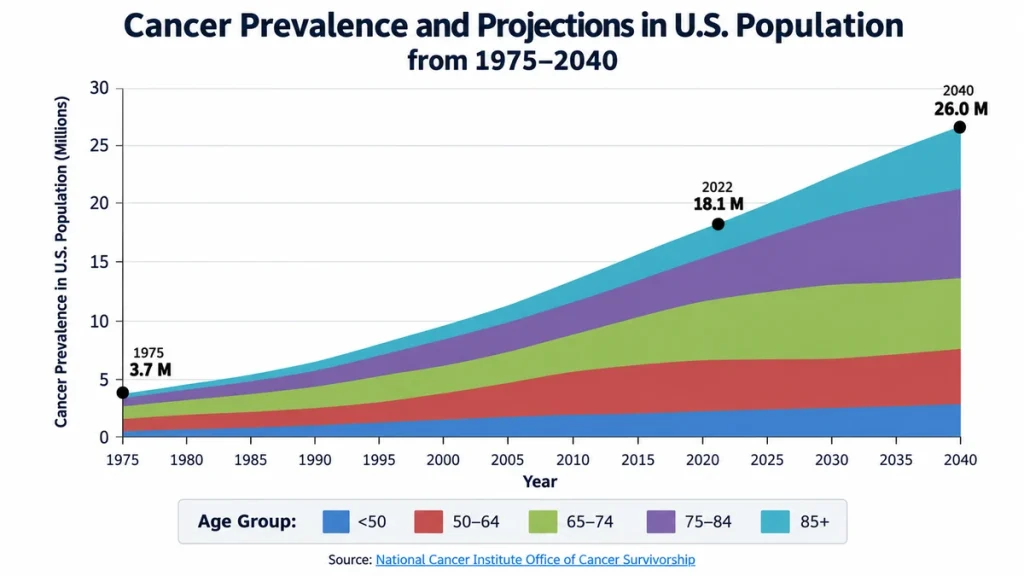
The National Cancer Institute projects continued growth in the U.S. cancer-survivor population. These population trends provide context, but individual life insurance underwriting depends on personal medical facts. Source: National Cancer Institute Office of Cancer Survivorship.
Why Your Follow-Up Appointments Matter
The NCI’s survivorship resources emphasize the importance of follow-up care after treatment. From an underwriting perspective, current follow-up can help document recovery and show whether recommended surveillance is being completed. An overdue test does not automatically mean a poor outcome, but it may create an unanswered question that an underwriter cannot ignore.
If a follow-up appointment is already scheduled soon, it may be sensible to discuss whether applying before or after that visit is better. The answer depends on why the visit is scheduled, what information is expected, and how urgently coverage is needed. There is no universal rule.
Should You Apply for Life Insurance After Cancer Now or Wait?
Waiting to apply for life insurance after cancer can sometimes improve the underwriting picture, but delay also has a cost. Age increases, health can change, and families may remain without the desired protection. The right timing balances present need with the likelihood that additional time or information will materially improve the application.
Reasons to consider waiting may include:
- Treatment ended very recently
- A major follow-up test is pending
- The insurer’s preliminary guidance indicates a clear postponement period
- Medical records are incomplete or contain an error being corrected
- A temporary health issue unrelated to cancer is still being evaluated
Reasons to consider applying or seeking a preliminary review now may include:
- There is an immediate protection need
- Follow-up is current and records are available
- Several years have passed since treatment
- A carrier appears to have guidelines suited to the specific history
- The applicant wants to understand realistic options rather than assume none exist
Waiting without a clear reason can leave your family without the protection you want. It also means you will be older when you apply, and your health may change. We would rather ask a practical question: is there a specific appointment, test result, or treatment milestone coming up that could give the insurer a clearer picture? If so, discuss that timing before submitting the application.
Traditional, Simplified-Issue, and Guaranteed-Issue Coverage
There may be more than one way to obtain life insurance after cancer. The policy names can sound similar, so it helps to look at what each one requires and what you receive in return. How much coverage can you buy? What will it cost? Is the full death benefit available from the start?
Traditionally underwritten coverage
Traditional underwriting generally asks the most health questions and may include records, an exam, and laboratory work. For applicants who qualify, it may offer broader choices, larger face amounts, or more favorable pricing than limited-underwriting products. A cancer history does not automatically eliminate this route.
Term life insurance provides coverage for a stated term, such as 10, 20, or 30 years, if the policy remains in force. Permanent life insurance is designed to last longer and may build cash value, subject to the policy’s guarantees, assumptions, charges, premiums, loans, withdrawals, and performance. The appropriate type depends on the need, budget, time horizon, and actual offer—not merely on which policy is easiest to obtain.
Simplified-issue coverage
Simplified-issue policies usually ask fewer health questions and may not require an exam. “No exam” does not mean “no underwriting.” The insurer may still use prescription history, medical databases, electronic records, motor vehicle information, or other permitted sources. Health questions must still be answered accurately.
These policies may have lower coverage limits or higher premiums than fully underwritten alternatives. Definitions vary, so compare the actual contract rather than relying on the label.
Guaranteed-issue coverage
Guaranteed-issue life insurance generally does not use traditional health questions for eligibility within the product’s stated age and state rules. It commonly offers smaller benefits at a relatively high cost per dollar of coverage. Many policies include a graded death benefit period for death from natural causes, during which the full face amount may not be payable. Accidental-death treatment may differ.
Guaranteed issue can be useful for some people who cannot qualify elsewhere, but it should not be treated as an automatic first choice. Review the premium, benefit, graded period, exclusions, policy duration, and total expected cost. Availability and provisions vary by insurer and state.
Understanding Higher Premiums and Temporary Extra Charges
An insurer may approve life insurance after cancer but charge more than its standard premium. This is often called a table rating or rated offer. Some cancer histories may instead receive a temporary flat extra charge—an additional amount per thousand dollars of coverage for a specified period—although structures vary.
The important questions are:
- What is the guaranteed premium or current premium under the offer?
- Is the extra charge permanent or temporary?
- If temporary, when does it end under the contract?
- Is the death benefit level during that time?
- Can the policy be reconsidered later, and is reconsideration guaranteed or discretionary?
- Would a different coverage amount or term create a better fit?
Do not accept an offer solely because it is technically an approval. A policy must still be affordable enough to keep. If the premium becomes too difficult to manage and the policy lapses, your family loses the protection you intended to provide. Compare the amount of coverage with a premium that fits your budget over time.
How to Shop for Life Insurance After Cancer Without Confusion
When seeking life insurance after cancer, applying to many insurers at once is not always the best strategy. Carrier guidelines differ, but a focused preliminary inquiry can often identify likely paths before a formal application.
A preliminary inquiry typically presents the relevant medical facts without promising an outcome. An underwriter may offer an informal indication, request more information, or say that the case should be postponed. An informal response is not a binding offer; final terms require a complete application and underwriting.
Give the insurer the complete history, including details you are unsure about. If one insurer’s favorable indication assumes a stage, date, or treatment detail that turns out to be wrong, the indication is not useful. Accuracy protects the applicant and helps compare carriers fairly.
When comparing possibilities, look beyond the quoted premium:
- Financial strength and claims-paying ability of the insurer
- Policy guarantees and duration
- Conversion options on term coverage
- Riders and their definitions, costs, and limitations
- Whether premiums can change
- Graded or limited benefits
- Surrender charges and policy charges on permanent coverage
- Service and review process
What If You Already Have Life Insurance?
If someone already owns life insurance, a new diagnosis does not ordinarily change the premium class on an existing individually underwritten policy merely because health changed after issue, provided the contract remains in force and the application was accurate. The policy terms control.
Do not cancel existing coverage while exploring a new policy. A replacement can restart contestability or suicide periods under applicable law and contract terms, create new surrender charges, require fresh underwriting, or cause the loss of valuable guarantees. Replacement forms and notices may be required.
Keep the old policy until the new coverage is issued, reviewed, accepted, paid, and confirmed in force—and only replace after comparing both contracts carefully. Our life insurance policy review information can help organize the questions, but carrier documents and state requirements govern.
Workplace coverage can help, but it may not be portable
Employer-sponsored group life insurance can provide valuable coverage, sometimes with limited health underwriting up to specified amounts. However, coverage may be tied to employment, and portability or conversion rules can be time-sensitive. Review the certificate rather than assuming the benefit follows you after a job change.
If workplace coverage is the only available option today, it can still be part of the protection picture. Just know the amount, beneficiary designation, cost, portability, conversion rights, and deadlines. Our article on life insurance through work and job changes explains those issues in more detail.
A Hypothetical Example of Timing and Trade-Offs
Consider a hypothetical 52-year-old who completed treatment for an early-stage cancer several years ago. Follow-up visits have remained current, there has been no recurrence noted in the records, and the person wants coverage to help a spouse manage the mortgage and final expenses.
One insurer might request full records and offer a rated 15-year term policy. Another might postpone because its internal guideline calls for more time. A simplified-issue carrier might offer a smaller benefit at a higher cost. None of those outcomes proves that one company is “good” or “bad.” Each insurer has its own guidelines for the risks it will accept, and each product has different requirements. That is why we look at more than one possible route when appropriate.
The applicant’s decision is not simply “take the cheapest quote.” Questions include whether the benefit is sufficient, whether the premium is sustainable, whether the term matches the mortgage timeline, whether an existing workplace benefit is portable, and whether waiting for a scheduled follow-up could reasonably improve terms.
This example is educational and hypothetical. Actual underwriting and policy availability depend on the person, insurer, product, state, records, and timing.
Common Mistakes to Avoid
Assuming a diagnosis creates a permanent ban
Some people never explore coverage because they believe any cancer history makes them uninsurable. That may cause them to overlook a workable option. A preliminary review can replace an assumption with current information.
Hiding or minimizing medical history
Incomplete answers can delay underwriting and may create serious problems if a claim occurs during the contestability period. Answer every application question honestly and completely. If a date is uncertain, say so and locate the record rather than guessing.
Focusing only on “no exam” advertising
No-exam coverage can still involve underwriting, and convenience may come with higher cost or lower limits. Compare what the policy does, not just what the advertisement removes.
Applying before an important pending test
An unresolved test can lead to postponement. When a medically recommended evaluation is already scheduled, discuss timing before submitting a formal application. Do not delay necessary medical care for insurance purposes.
Replacing good existing coverage too quickly
New coverage should be fully reviewed and in force before old coverage is surrendered. Replacement can change guarantees, costs, exclusions, contestability, and policy values.
Buying a benefit that cannot be maintained
A smaller policy that stays in force can be more useful than a larger policy that lapses. Review the premium today and the policy’s future premium structure.
Questions to Ask Before Accepting an Offer
Once you receive an offer, take time to understand what you are buying. An approval is encouraging, but you still want to know whether the policy solves the problem you started with. Ask:
1. What type of policy is this, and how long is coverage designed to last?
2. Is the premium guaranteed for the full term or subject to change?
3. Is the offer standard, rated, or subject to a temporary extra charge?
4. Are there graded benefits or other limitations?
5. What exclusions are stated in the contract?
6. What happens if a premium is late?
7. Does a term policy include a conversion option, and what are the deadlines?
8. If permanent coverage is proposed, which values are guaranteed and which are not?
9. What charges, surrender periods, loans, or withdrawal effects apply?
10. How does the proposed benefit connect to the actual family need?
11. Is replacement of existing coverage involved?
12. What should be reviewed during the free-look period?
The free-look period is a state-required or contract-provided period during which a new policy owner can review the policy and return it under stated rules. The length and requirements vary. Read the delivered contract promptly.
Where We Start When Reviewing Your Options
We start by listening to what you want the coverage to do. That might mean income replacement, mortgage protection, final expenses, business obligations, estate needs, or another clearly defined responsibility. Then consider how much protection is needed and how many years the responsibility will last. Our guide to how much life insurance you may need provides a practical framework.
Next, outline the medical timeline. You do not need to hand every medical document to an agent immediately, but the diagnosis, stage if known, treatment dates, current status, follow-up schedule, medications, and any recurrence should be available for an accurate preliminary discussion.
It also helps to tell us what matters most to you. Is the priority a large temporary benefit, a modest permanent benefit, a workplace conversion, or simply learning whether traditional coverage is realistic today? That gives us a useful starting point for evaluating the available options. The goal is coverage that serves a purpose and fits your budget.
Finding a Practical Next Step
Life insurance after cancer can take patience, especially when an insurer needs medical records or additional follow-up. You do not have to figure out every detail before asking for help. Start with your medical history, any coverage you already have, and what you want to protect. Those details help us decide which options are worth exploring.
We can help you compare policy types, review existing coverage, and prepare an application when there is a suitable option to pursue. The insurer makes the final decision on approval and price after reviewing the application. Our role is to help you understand the choices and make an informed decision without pressure.
About Jay A. Cohen, The Ocala Insurance Guy
Jay A. Cohen is a licensed health and life insurance agent based in Ocala, Florida. He is licensed to serve clients in Florida, Virginia, Illinois, Utah, and California. We listen first, explain insurance in plain language, and help people evaluate coverage based on their needs and budget. That includes understanding the costs, benefits, and limitations before making a decision.
If you are evaluating life insurance after cancer, you can explore our life insurance information, learn more about Jay A. Cohen and The Ocala Insurance Guy, or use The Ocala Insurance Guy Contact Form to discuss your situation and explore your coverage options.
This article provides general educational information and is not individualized insurance, investment, legal or tax advice. Policy provisions, availability and requirements vary by insurer and state. Consult qualified professionals before replacing, surrendering, borrowing from or materially changing a life insurance policy.