

“Do we need life insurance or an annuity?” Before we get into products, let’s talk about what’s worrying you. Is it leaving your family without your paycheck? Or reaching retirement and wondering whether the money will last? Both are reasonable concerns. They just lead us to different conversations.
Maybe you’re getting close to retirement. There’s a policy through work, some savings, and a pension estimate you haven’t looked at in a while. Someone mentions an annuity. Someone else says you need more life insurance. Now you’ve got two suggestions and no clear reason to choose either. Sound familiar?
We can sort that out. The decision about life insurance or an annuity starts with the people and bills the money needs to support. We’ll work through a family’s protection gap, a retiree’s monthly shortfall, and the cash you shouldn’t tie up in either contract. No purchase needs to come before that conversation.
If something here sounds like your situation, send us a question through our Contact Form. You don’t need all the answers before we talk.
Life insurance or an annuity? Start with who needs the money
Here’s the starting point: life insurance generally pays a death benefit to your beneficiary if you die while covered. An annuity can turn money you put into a contract into income, depending on the arrangement. So, life insurance or an annuity? For a family replacing a lost paycheck and a retiree funding everyday bills, the same question can have different answers.
There’s a reason people weigh life insurance or an annuity together. Certain life policies build cash value, and some annuities provide money to beneficiaries. That doesn’t make the contracts interchangeable. A benefit can sound useful on a brochure and still arrive at the wrong time for your household. We want to know when the money is needed before getting impressed by the amount.
It also helps to know who controls the contract. Buying life insurance or an annuity doesn’t automatically give every person in the household the same rights. The owner, insured person, annuitant and beneficiary can have different roles. We can walk through those names on the paperwork so you know who can change what.
A $150,000 death benefit and a $550 monthly payment aren’t competing price tags. One could help a survivor through several difficult years; the other could help a retiree pay a recurring bill. Comparing life insurance or an annuity means giving each number a job. Otherwise, the larger number can get all the attention without answering your question.
What would a survivor actually need?
Let’s start with the family. If a paycheck stopped tomorrow, the mortgage wouldn’t politely wait for everyone to get organized. Groceries, childcare and health coverage would still need attention, too. Before choosing life insurance or an annuity, we’d look at what the surviving household would actually have to pay, and what income would still come in.
Who would have to change their working hours if you weren’t here? That answer can change the coverage conversation more than a rule of thumb about replacing a few years of salary.
An old benefits statement is useful, but we need to know whether that coverage follows you out the door when you retire. A pension estimate deserves the same attention: does the payment continue to a spouse? Existing benefits can change how much life insurance or an annuity would help. They need checking, not automatically counting twice.
Our life insurance needs calculator can help put those pieces together. Include coverage that really will be there and savings you’re comfortable leaving for survivors. If you’re unsure about a number, try it both ways. The result gives us something concrete to discuss; it isn’t an instruction to buy that amount.
What a death benefit can buy your family
And what about the parent who doesn’t bring home a paycheck? School pickups, meals, laundry and caring for children still take time. Someone else may need paid help or fewer hours at work. A conversation about life insurance or an annuity should account for that unpaid work, too. A death benefit can give the family room to adjust.

For a need that lasts a certain number of years, term life may be worth discussing. The protection period can line up with children growing up or a mortgage being paid down. Renewal costs and conversion rights vary. When we compare life insurance or an annuity, knowing when existing coverage ends matters as much as knowing its face amount.
Permanent life insurance is designed for longer-lasting needs, provided the policy stays in force. Some policies also build cash value. That money comes with contract rules, costs and possible effects on the death benefit. The NAIC’s consumer life insurance guide explains the basics. Cash value deserves its own discussion when you’re weighing life insurance or an annuity.
Your health can affect what life coverage an insurer offers and at what price. That review is called underwriting. A quote doesn’t settle the application. If a discussion about life insurance or an annuity leads you toward replacing coverage, keep the existing protection until the new policy’s terms, acceptance and effective date are confirmed.
Let’s work through a family’s numbers
Let’s put some numbers to it. This is a hypothetical family, not a client story. They estimate a $1,500 monthly shortfall for seven years while the children finish school. That’s $126,000. Add $24,000 for immediate transition expenses and the planning estimate becomes $150,000. We haven’t allowed for inflation, taxes or interest. We’re giving the life insurance or an annuity conversation a starting number.
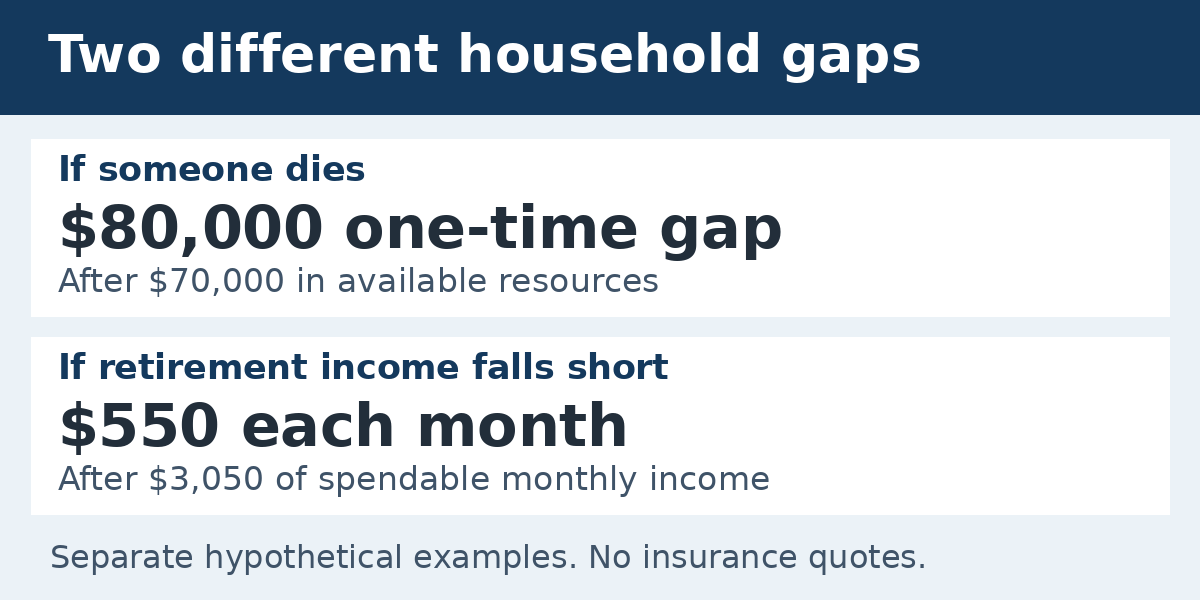
They already have $50,000 of confirmed coverage and would leave $20,000 of savings for the survivor. Subtract both from $150,000 and the uncovered amount is $80,000. But there’s a catch: what if that savings account is also their emergency fund? Keeping it available raises the gap to $100,000. That matters more than debating life insurance or an annuity in the abstract.
Would the same need still exist seven years from now? Perhaps the surviving parent expects to return to full-time work once the children are older. Their work history, likely pay and childcare costs all matter. That timetable helps us work out where life insurance or an annuity fits, instead of building a plan around a paycheck that may never arrive.
What if the premium for the full amount won’t fit? Then we work with the actual budget. A smaller death benefit may still cover important bills and buy the family time. Life insurance or an annuity should improve financial security without creating a payment you struggle to keep. An ambitious plan that lapses won’t do the job you intended.
Meanwhile, keep the roof repair and insurance deductible in view. Those expenses can show up while everyone is alive and well. You shouldn’t need a family emergency and a contract withdrawal at the same time. With life insurance or an annuity, keeping some money accessible is part of making the rest of the plan workable.

THE OCALA INSURANCE GUY · HOUSE AD
Big jar. Small reserve.
That oversized jar has plenty of room. Unfortunately, room doesn’t pay a repair bill. Before putting money into life insurance or an annuity, let’s make sure there’s enough left for an ordinary bad month. We can work through that alongside the protection you’re trying to add.
How an annuity can provide retirement income
Now let’s switch to the person paying bills in retirement. An immediate income annuity generally starts payments within a year of purchase. Deferred contracts can build value or start income later. The Investor.gov annuity guide explains the differences, and our annuity page covers fixed-contract options. Timing helps explain why life insurance or an annuity might serve different needs.
Say your essential spending is $3,600 a month and reliable, spendable income comes to $3,050. You’re short $550. That’s our second hypothetical example, not an annuity quote. The question about life insurance or an annuity now has a specific purpose: covering that monthly difference while you’re alive. A life policy’s death benefit generally goes to someone else after you die.
How long does the $550 shortfall last? Six months until another benefit begins is quite different from a gap you expect for the rest of your life. We’d work through that before discussing a lifetime payout. Choosing life insurance or an annuity without the dates could leave you paying for a solution to a problem that was temporary.
And a reliable payment still has to buy things. Groceries that cost $550 today may cost more later. We’d look at whether payments can increase, what that feature costs, and what happens to starting income. Those details belong in the life insurance or an annuity decision just as much as the attractive number on the first page.
A monthly check and an emergency fund
A predictable deposit can make groceries and utilities easier to plan around. It won’t necessarily handle a broken transmission and a dental bill in the same week. Retirement income and accessible savings do different jobs. We’d keep both in the conversation rather than assuming a bigger monthly check solves every expense.

The word “annuity” covers several kinds of contracts. Fixed annuities credit interest under their terms. Fixed indexed annuities use an index-linked formula with limits on what gets credited. Variable and registered index-linked annuities have different risks and can lose value. Before narrowing life insurance or an annuity to a particular product, we need to be clear about what’s being offered.
Then there are the numbers inside the contract. Account value, cash surrender value and an income calculation base may all be different. A large printed number isn’t necessarily money you can withdraw. This is where a life insurance or an annuity proposal deserves a slower read: what can you spend, what produces a payment, and what might go to a beneficiary?
An income rider is an added contract feature with its own conditions and possible fee. Its calculation base may determine a payment without being available as a lump sum. We can translate that into dollars and explain what an extra withdrawal could change. The value of life insurance or an annuity depends on benefits you can actually use under the rules.
Illustrations also deserve a fair comparison. Different start dates, deposits or assumptions can make one proposal look better before anything else has changed. With life insurance or an annuity, we can separate guaranteed amounts from projections and explore a weaker outcome. You should understand what the household could still afford if the illustrated result doesn’t happen.
Read the withdrawal rules before the payout page
Here’s a useful question: “If we need our money back in three years, what would actually land in our bank account?” The answer may be quite different from the balance on a statement.
A surrender charge is one reason for that difference. Taking money out early can trigger a charge, and other contract adjustments may apply. The NAIC’s fixed deferred annuity guide explains withdrawal restrictions. When we review life insurance or an annuity, we want the amount after charges, along with any benefit the withdrawal would reduce.
Some choices are harder to undo than others. Turning an annuity’s value into scheduled payments is called annuitization, and it can mean giving up access to that value as a lump sum. An income rider can work differently. Choosing life insurance or an annuity involves understanding which decisions stay flexible and which may become permanent.
Cash-value life insurance has its own withdrawal and loan rules. Loans accrue interest and can reduce the death benefit. A policy that lapses with a loan can create tax consequences. Getting money out of life insurance or an annuity deserves more than a quick look at the available balance. We can explain the contract figures while your tax adviser checks the tax treatment.
What happens to the survivor’s payment?
Let’s bring the other person back into the conversation. Two people may share a budget, but that doesn’t mean both incomes keep arriving after one dies. A choice between life insurance or an annuity can look very different once we work out what the survivor would receive. We’d run the numbers for either person dying first.
Would the surviving spouse have enough money next month? How about next year? A payment that works beautifully while both people are alive may leave a very different budget for one.
With a single-life annuity, payments generally stop when the named person dies unless another contract feature applies. A joint-and-survivor arrangement can continue payments under its terms. That difference is central to life insurance or an annuity planning for a couple. The starting payment matters, but so does the payment the survivor would actually keep.
The survivor options on life insurance or an annuity deserve a close look. An annuity’s period-certain option can provide payments for a stated minimum period. A refund feature may provide an amount at death under the contract’s formula. Added protections can mean a lower starting payment. We can compare the same deposit, dates and people so you can see what that protection costs.

One person, many of the same bills
One person’s death doesn’t cut every household bill in half. The grocery bill may fall; the mortgage might stay exactly where it was. Heating, insurance and home repairs still need attention. That’s why life insurance or an annuity needs to fit the survivor’s real expenses, including some cash to get through the first unsettled months.
Beneficiaries matter on both sides. An annuity’s death benefit can depend on the contract and whether income payments have begun. Life insurance pays according to its policy terms and beneficiary designation. Buying life insurance or an annuity doesn’t update the instructions on your other accounts. An old designation can stay old until somebody changes it.
The person receiving the money also needs to know where to find the paperwork. That’s a small practical step with real value during a difficult time. If a trust, minor child, estate or former spouse is involved, an attorney can help with the legal arrangement. We can explain the insurance questions to bring to that discussion.
You may discover both needs are real. Perhaps the family needs extra protection for five years, while the retirement income gap begins ten years from now. Life insurance or an annuity doesn’t have to mean picking one product for every stage of life. The timing can help us decide which need to address first and what can wait.
How taxes affect life insurance or an annuity
Taxes are another reason these contracts aren’t interchangeable. As the IRS explains, life insurance death benefits are generally excluded from a beneficiary’s federal gross income, with exceptions. Interest can be taxable. That distinction can affect life insurance or an annuity comparisons, so your tax adviser should review the actual ownership, funding and beneficiary arrangement.
Annuity payments can include taxable income, a return of after-tax money, or both, depending on the arrangement. IRS Publication 575 explains relevant pension and annuity rules. For budgeting, the useful figure is what you keep after tax. An advertised payment and spendable retirement income aren’t always the same number.
An annuity inside an already tax-deferred retirement account doesn’t add another layer of tax deferral. There may still be a contract benefit worth considering, such as an income guarantee. In a life insurance or an annuity discussion, we should be able to name the benefit you’re paying for without treating the tax label as the whole explanation.
Replacing an existing contract deserves particular care. You could restart surrender charges or give up a guarantee you can’t get back. Moving from life insurance or an annuity you already own should begin with the current contract and a recent statement. We can compare what changes; your tax adviser can check transfer consequences before money moves.
How Jay helps you compare actual options
You don’t need to arrive with a polished financial plan. Bring the policies you have, the proposals you’ve received and a rough monthly budget. We can start there. When you’re deciding about life insurance or an annuity, Jay can help identify the protection or income gap before discussing products that might fit it.
For life insurance, that includes explaining coverage choices, affordability and the application process for options Jay is authorized to offer. The insurer makes the underwriting decision. For available fixed annuities, we can work through insurer-provided figures for income, survivor benefits, withdrawal access and charges. You should know what a recommendation would do for your particular need.
This is where a good qualified insurance agent earns their place in the conversation. Two proposals can look similar while treating an important withdrawal or survivor benefit differently. Comparing life insurance or an annuity with someone who can explain those differences helps you evaluate the recommendation. The answer may be to keep what you already have.
And we should be clear about the limits of that help. Jay provides insurance guidance. Tax calculations belong with your tax adviser, legal arrangements with an attorney, and securities recommendations with an appropriately registered professional. We can help you get the right contract information to those people instead of leaving you to translate everything yourself.
THE OCALA INSURANCE GUY · HOUSE AD
The bills keep coming.
The bills have a remarkable ability to keep coming. They don’t seem particularly interested in whether retirement went according to plan. We can help you put the important ones beside the income that would pay them, then work through where life insurance or an annuity might help. Starting with actual bills makes the discussion much more useful.

Questions to ask before buying life insurance or an annuity
Before you sign anything, take a breath. You should be able to explain what you’re buying, who gets paid and how the commitment fits your budget. Life insurance or an annuity is too important to choose because a presentation sounded reassuring. A few direct questions can show whether the explanation holds together.
A plan should also leave room for ordinary life. You might move, help a relative or need a major repair. The right conversation about life insurance or an annuity includes those possibilities. Money committed to a contract still needs to fit the life you’re living outside it, including a month that costs more than expected.
- Who gets paid, how much, and what has to happen first?
- Which dollars are guaranteed, and which depend on a projection?
- What money can we access after charges, and what would a withdrawal change?
- If either of us dies, what payments continue and what expenses remain?
- If we keep our current policies, how much protection or monthly income is still missing?
- What happens if we wait a year, pick a smaller amount, or decide to keep our money accessible?
An explanation of life insurance or an annuity ought to leave you with fewer questions, not more confusion. If an answer is unclear, we can go back to the insurer for the relevant terms. “That’s how it usually works” isn’t enough when you’re counting on a specific payment. You deserve to understand the parts that could change the outcome.
Decide which gap you want to close first
So, do you need life insurance or an annuity? We’d start with the bill or responsibility that worries you most. A death benefit can help the people who depend on you. Retirement income can help you keep paying your own bills. Some households need both kinds of planning, and others already have enough protection or income in place.
The next step can be simple. Gather what you already own and tell us what you want the money to do. We’ll help you work through the trade-offs, including whether anything needs changing. Life insurance or an annuity should make sense in your household before it makes sense on an application.
About Jay A. Cohen, The Ocala Insurance Guy
Jay A. Cohen is a licensed health and life insurance agent based in Ocala, Florida. He is licensed in Florida, Virginia, Illinois, Utah, and California.
Our approach is educational: we listen to understand your needs, goals, and budget, then explain your options in plain language. We walk through the benefits, costs, and limitations, welcome your questions, and help you make an informed decision without pressure to buy a particular product.
To explore permanent coverage and available policy options, visit the Jay A. Cohen life-insurance information page. You can also learn more about Jay’s educational approach and insurance experience.
Want help comparing your household protection and retirement income before you commit your money? Use The Ocala Insurance Guy Contact Form. Please leave medical records, account details, and policy numbers out of the initial message.
General education only. This article does not provide individualized insurance, investment, legal or tax advice. The examples are hypothetical and are not quotes. Benefits, costs, restrictions and availability vary by insurer, state and contract. Insurance guarantees depend on the issuing insurer’s claims-paying ability. Photographs are AI-generated illustrations.